The Sad State of Print on Demand and Etsy

Someone in a Print on Demand group I am a member of was bragging they have made 11,669 sales on Etsy over the last two years, and according to eRank that puts them in the top 1% of all Etsy stores.

Sounds great until you realize what these numbers mean.

This is an average of 16 sales per day.

Assuming $5 profit per sale – I don’t know what they are selling so this might be generous – that is $80 per day or $2400 per month or $28,800 per year.

In other words – poverty income. Being in the top 1% of Etsy sellers means you are still in poverty when selling POD products.

No surprise this person’s Facebook profile indicates they also have a “real” job.

If you had a full-time job in California at McDonalds making $20 per hour you would be $160 per day plus benefits.

More income with potentially fewer hours because being in business yourself can be incredibly time consuming, although with POD much of the sales process is supposed to be hands-off. (However the customer support can be brutal).

POD to Etsy is heavily promoted on places like YouTube as a great way to make money. But for more than 99% of sellers, probably 99.9%, it is just a dream and another impossible get rich scheme.

No wonder there has been recent consolidation in the print on demand industry.

eBay’s Criminal Complaint $59 Million Fines 1000 Layoffs

eBay, also known as a tech company with a seemingly continuous turnover of top management chasing short-term profits and finding new ways to take money from sellers and affiliates, has seen it come to a head in January 2024. Some highlights ….

Criminal Prosecution

eBay had maliciously targeted, threatened and terrorized individuals who were critical of the company. The reprehensible conduct went to the top of the company.

Now, a 6 count criminal complaint has been filed against eBay in Massachusetts. In return for a three-year non-prosecution agreement, eBay will pay a $3 million dollar fine for its criminal behavior.

But the three million dollars was just the tip of eBay’s penalties for wrongdoing.

$59 Million DOJ Fine for Facilitating Dangerous Counterfeit Pill Trafficking

The United States Department of Justice took action against eBay for allegedly violating the Controlled Substances Act by facilitating the sale of pill press machines used to manufacture counterfeit prescription medications.

eBay’s failure to comply with “basic” requirements allowed people to setup pill factories and traffic in counterfeit pills, sometimes laced with dangerous Fentanyl.

To resolve the DOJ claims of violations eBay is paying a whopping $59 million dollar penalty.

Get this … that’s just for starters.

The DOJ is also suing eBay for selling devices used to defeat vehicle emissions controls, and also for selling mislabeled pesticide products. Expect more fines in the future.

Frankly, anyone looking at eBay’s product listings knows that’s just the tip of the iceberg for illegal activity eBay allows. For intellectual property owners eBay is a cesspool of IP theft that eBay profits from.

1000 Employees Terminated – 9% of eBay’s Workforce

eBay then announced the firing of 1000 employees (9 percent of its workforce) and cancelling third party contracts with its “alternate” workforce.

What is an “alternate” workforce? I don’t know, but it sounds like fraudulently claiming employees are independent contractors via employment agencies. I could be wrong until more information is known, but the 1000 terminations in the news is seemingly a low figure not accounting for how many people and their families are having their finances impacted.

eBay’s most recent CEO blamed “our overall headcount and expenses have outpaced the growth of our business.”

Hmmm. Let’s look at the “expenses”.

$62 million in fines, with more likely to come, divided by 1000 employees is $62,000 per employee.

It isn’t stated how much each fired employee was being paid on average, or the value of their benefits. Probably more than $62,000 assuming they are in the Bay Area … although eBay questionably claims it is a Utah company when it comes to resolving disputes. This, IMHO, is part of the problem – shady practices. eBay may have some employees in Utah but it is headquartered in California and really, no one considers it anything but a California company albeit with some units located elsewhere.

Notably, I have not seen an announcement about eBay decreasing or halting the dividend paid to shareholders. It appears employees are bearing the brunt of improper management, while management continues to reap stock options and investors get paid. In fact, the dividend rate has been increasing giving investors more and more of eBay’s income even though the CEO claims layoffs are needed because expenses are too high.

Zacks says eBay is paying about 31% of its earnings in dividends, or $519 million per year if I read this right – https://www.zacks.com/stock/research/EBAY/dividend-history

Looks like it turns out employee expenses are too high, but not stock payments?!

And that, IMHO, is another part of the problem at eBay. There is nothing I have seen about the big-wigs taking a hit and responsibility for their mismanagement. Just the little guys while the stock payments continue to roll and millions are paid in fines.

Predictions:

– eBay will continue to pay substantial fines.

– Automation and AI result in even more employee layoffs.

– Payments for management and stockholders will continue and even increase.

Let the good times roll!

Amazon Black Friday and Coupon Sales Scam

Did you know Amazon makes MORE money from Black Friday and other coupon sales even though products are cheaper? Yep.

This is how the coupon scam works …

Amazon charges a fee for product sales, typically 15% for many products.

So if a seller offers a product worth $30 and Amazon usually charges a 15% fee of $4.50 then the seller receives $25.50.

But when a coupon “sale” is done, such as Black Friday, Prime Day, other endless sales during the year, two things happen – PAY ATTENTION TO THIS:

1. Amazon charges its 15% based on the original product price – not the reduced coupon price.

2. Amazon charges the seller a “redemption fee” when a customer uses a coupon.

So if a seller offers a product worth $30 and Amazon usually charges a 15% fee of $4.50, if a $5 coupon is offered, the buyer will pay $25. The seller will only receive $19.90: $30 minus the $5.00 coupon minus the $4.50 Amazon fee based on the non-sale price minus a coupon redemption fee of $0.60.

Instead of making 15% ($4.50) on a $30 sale Amazon makes 20.4% ($5.10) on a $25 sale.

By using a coupon sale Amazon increased its cut of the buyer’s purchase by a whopping 36% from 15% to 20.4% by basing its fee on the non-sales price and charging the seller a redemption fee.

Wow.

This is a zero sum game where Amazon’s increased cut causes a reduced cut for sellers.

Customers get a deal. Amazon increases its profits 36 percent. Small business owners get screwed.

*** Note that Amazon INCREASES its profits from sales. Amazon is NOT offering a sales discount for itself when advertising coupon “deals” ***

But do customers really get a deal?

Sellers obviously have to increase their regular price accordingly which leads to higher prices for customers.

Bottom line: Coupon sales events such as Amazon’s Black Friday, Prime Day, other days lead to overall higher prices for customers, bigger profits for Amazon, and shrinking profits for business owners.

If Amazon were truly offering a “deal” it would not charge a coupon redemption fee and it would charge its commission based on the sales price paid, as well as decreasing its 15% rate. For example, if Amazon really wants to offer a 25% price discount it should not charge a coupon fee, base its commission on the sales price paid, and also reduce its commission rate and give the savings to buyers. Right?

One solution is to simply lower prices for product sales without needing to use a coupon – as happens in normal retail. It is the “coupon” which is the scam because it allows Amazon to maintain the product price for its commission rate and to extract a fee for use of the coupon. Business owners and customers would be better served if a $30 product was simply on sale for $25 without the need for the phony “coupon” which serves to increase Amazon’s profits and necessitates overall price increases so sellers can stay in business despite Amazon’s money grab.

Donald Trump Never Surrender Mug

Donald Trump has been arrested in Fulton County Georgia and given an inmate / booking number of P01135809. He has been released from custody pending trial on $200,000 bail.

Ever frugal with his money, Trump reportedly did not put up the full cash bail himself but instead used a bail bondsman. The result is Trump had to pay a premium up front to use the bondsman and overall is paying more than if he had simply paid it himself. Interesting choice, but I am not a billionaire so maybe it was a good move us regular folks do not understand.

Trump is also always the marketer. No doubt a lot of thought went into his booking mugshot and the pose he would take.

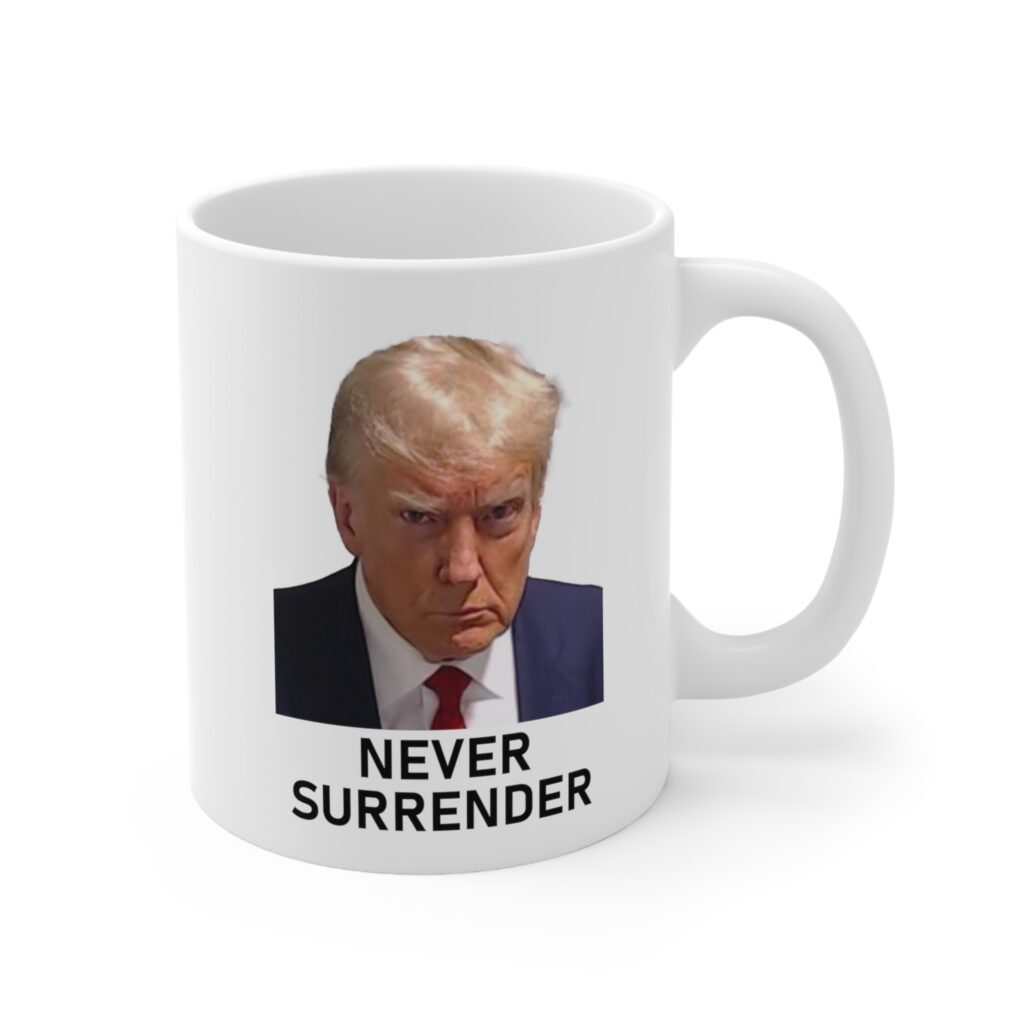
Here is the Trump mug shot on a coffee mug:

trump mugshot mug
Trump Never Surrender Mug

Never Surrender is both true for Trump in fighting for his freedom against perceived enemies, but also ironic in that he did voluntarily surrender to the authorities to be processed and booked.

But there is a difference between a going out in a blaze of glory and fighting through the legal system. This irony seems to be lost as Trump is accused of not properly using the legal system to challenge the 2020 election, yet that is what he is doing to challenge the criminal charges. He has not been calling for riots or a human blockade to prevent an involuntary arrest.

Unquestionably, 2024 will be one of the interesting political and legal scenes the country has ever experiences.

Suja Organic Vibrant Probiotic Review

I picked up a 12 ounce bottle of Suja Fruit Juice. It had some nice looking ingredients, said it Supports Digestive and Immune Health, and is an organic probiotic.

The main ingredients are purified water, strawberry, raspberry, lemon and honey.

The taste verdict – meh.

The taste was fine, just underwhelming. Mainly, it felt watered down. Looking at the Suja bottle it says 28% juice. Maybe they should up the juice count. This Suja also had 4g of added sugars which seemed unnecessary for this type of drink.

Definitely a thin and watered down taste. Not as bad as Kool Aid but in that range. I’ll pass on getting Suja again.

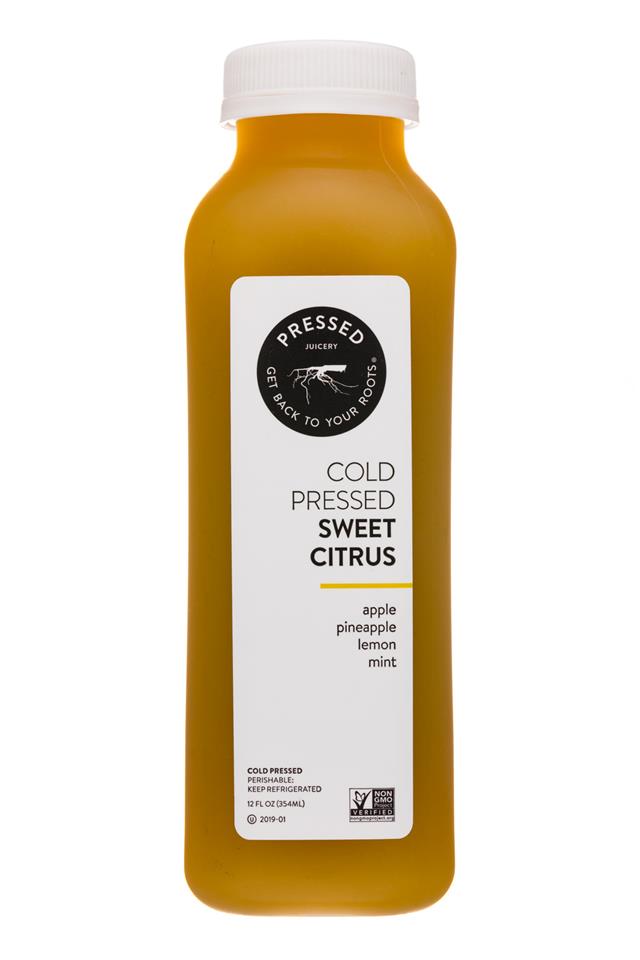
Pressed Sweet Citrus Review

I tried Pressed Juicery’s Sweet Citrus after seeing it at Bel Air grocery. It was $5 (on sale) for a small 12 ounce bottle that listed but four ingredients:

Apple, Pineapple, Lemon and Mint.

Except for a label saying it is non-GMO, Pressed made no claims about its drink.

There was nothing about it being awesome, healthy, not having sugar or added ingredients, ir doing something me. Just a black and white generic looking label.

Intrigued by the simplicity I gave it a try.

It was really good.

The light mint after taste was interesting and nice.

Pressed Sweet Citrus is recommended for its taste. The price is high so you will want to savor every drop and drink it slow.

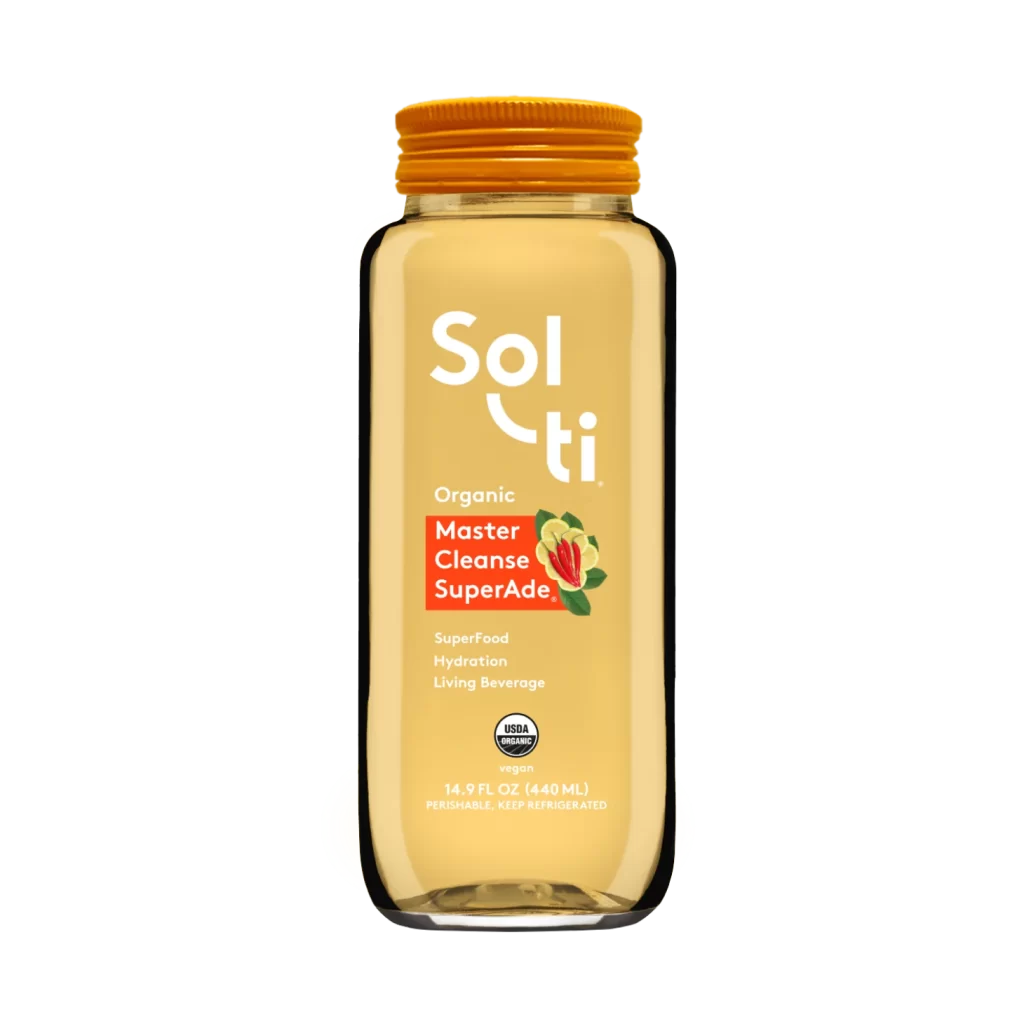
Solti Master Cleanse SuperAde Review

I tried the Solti Master Cleanse SuperAde drink after seeing it a Bel Air grocery. The advertising says it is USDA approved organic and vegan.

LOL.

I thought drinks were vegan but what do I know about what goes into them?

The bottle also says it is a “living beverage”.

No idea what that mean, but I was intrigued and decided to give it a try.

UGH.

Rarely do I toss a bottle before finishing it but this was bad.

Mainly, there is a horrible, burning after-taste. I had to wash my mouth with water to remove the burning. I tried drinking the SuperAde several times with the same result before trashing the bottle.

The ingredients include Cayenne Pepper, Lemon and Maple Syrup.

What a combination!

Definitely creative.

If cayenne pepper and lemon is your idea of a good time then the SuperAde is for you. Otherwise I suggest looking elsewhere for a hydrating superfood.

RedBubble Marches to Bankruptcy With New Reverse Robinhood Steal from the Poor Strategy

How would you react to losing up to 50% of your pay from your employer? And paying it to your employer!

Welcome to the insane world of RedBubble.

RedBubble is an extremely poorly managed company from Australia. This penny stock enterprise has seen its market valuation drop a staggering 95 percent in value and the best end game scenario is likely a bankruptcy sale of the company to competent owners.

RedBubble is an online marketplace of products. Third party artists create designs which are placed on products such as mugs and shirts which are made and shipped by other companies. RedBubble sets a base price, guaranteeing its profit from every sale. The artists add their margin and that is the price the customer pays. Customer buys a product, RedBubble profits, and its costs are sending the design to the production and shipping company and paying the artist their margin. Easy money, right? Not if you’re RedBubble.

Repeatedly battered in the courts for illegal practices, in early 2023 RedBubble fired 1 in 7 (14 percent) of its employees. Then it cut in half how many designs an artist could create each day. One would think if a company needs more revenue it would seek more designs and sales, or increase prices. Instead, management came up with the new and wonderful reverse Robinhood strategy of stealing from the artists it depends on.

Here is how it works …

Instead of raising its base product prices which should guarantee the company a profit on every sale, RedBubble instituted a “tiered” program for artists which imposes a fee starting at an incredible 50 percent of the artists profits. If an artist can generate more sales the fee gradually declines to about 18.5 percent.

To be clear, how this works is if RedBubble’s base price for a product is $10.00 (which again, presumably is profitable with RedBubble only paying 4 dollars for its manufacture) and an artist adding their 20% margin for creating the design and marketing material to sell the product, then from the $12 paid by the consumer the artist receives $2.00. With the new Reverse Robinhood Strategy RedBubble is now taking up to a half, or $1 away from the artist and giving it to itself. So instead of the artist receiving $2, they only get $1.

The vague “tiers” mean if an artist sells enough, and becomes a rockstar, then can move up a “tier” and eventually not have to pay any fee.

There is no standard for who pays a fee or not. RedBubble makes clear it is at their discretion and there are no standards. Basically, RedBubble is just stealing up to half of the artists profits – taking money from the artists and putting it in its pocket.

How does one know what tier they will be in? LOL. RedBubble says artists have to accept new legal terms agreeing not to sue the company just to find out! Run that sentence back in your brain a few times. Yes, it is like the infamous Obamacare reference to needing to pass the law to find out what is in it.

Commonly, when a business needs more money they increase prices paid by consumers. When the government needs more money it taxes the rich. There is little purpose in taxing the poor because the poor don’t have the money.

Here, RedBubble is taxing the poor, up to 50 percent of their earnings. Ouch.

But if you’re a Rock Star that RedBubble does not want to piss off and drive away, then there is no fee.

Ultimately, RedBubble’s service is going to keep dwindling as artists leave, decide not to submit new designs to the service, and future Rock Stars never materialize because of the new fee.

If you are wondering if this is a tried and true strategy for businesses to follow when they are in financial distress – it is not. I cannot think of any company who has ever done this. It’s bonkers.

Ironically, there are many marketplaces similar to RedBubble and their number keeps increasing. It’s not like artists are trapped into using RedBubble because of its overwhelming marketplace clout. Rather, RedBubble is getting clobbered by Amazon and upstart print on demand companies.

If you are an artist considering Redbubble just stop. Don’t. Go anywhere else.

If you are an investor thinking the stock can only go up after dropping 95% and suddenly the company’s bank account will be juiced from stealing money from artists, think again. There are no dividends being paid. Nothing the company is doing will increase sales. Instead, sales will drop. This is a desperate and incredibly ill-conceived idea from a poorly managed company. If management were better it would be seeking a sale and that could be a reason to get in a low price. Frankly, it wouldn’t surprise me if the company was shopped for a sale after the initial juice of stolen artist money makes the books temporarily look better, but I wouldn’t expect a premium value to be paid to this mess of a company that is circling the drain.

Why AI Will Replace Merch Designers

An Internet Marketer, Michael Essek, recently wrote a missive defending his business and the Merch on Demand industry as a whole from AI, concluding there was nothing to fear from AI taking away their livelihood.

I disagree. The risk is real. I believe it will happen.

Here is what Essek said:
“No doubt by now you’ve seen impressive looking artwork created in seconds using AI text-to-image tools like Midjourney, Stable Diffusion, Dall-E and others.

Progress in this space has been so rapid that features I thought would be near impossible to develop (decent vector style outputs, accurate text rendering etc.) are already starting to arrive.

Looking at such swift progress, it’s hard not to wonder if this is about to become a very real threat to the humble T-Shirt designer, illustrator or artist trying to make a living from their work.

I mean – if an AI user can produce several decent quality versions of a T-Shirt concept in a matter of seconds, and a print-quality design in a few seconds more…doesn’t that spell curtains for the average designer?

It would seem to be pretty cut and dry on the face of it.

What takes me (an experienced designer) at least an hour to create by hand in Procreate and Photoshop takes AI a matter of minutes using something like Midjourney (and if that’s not the case just yet, it seems likely within a matter of months given current progress).

So how long can we human artists stay competitive if this AI continues to develop at current rate?

Will people really want to pay more for the ‘human touch’ of non-AI designs?

Will marketplaces like Redbubble and Merch By Amazon replace us all with AI designers?

And what about when AI art finally figures out how to draw hands, and do custom lettering that is spelled correctly?

If these questions keep you up at night, I understand.

But I do think there’s one major part of this whole equation that many doomsters and gloomsters are ignoring…

And that’s the IDEA part.

The idea BEHIND and the purpose OF the art – that’s what really matters.

That’s why there is any art in the first place.

Art, artwork, illustrations, and designs can do nothing – and ultimately, won’t exist – if they aren’t part of a bigger picture.

Yes, an AI image might look professional, be aesthetically pleasing, or fool people into thinking it was done by a human – but that doesn’t mean it has any real commercial use, in-and-of itself.

And it certainly doesn’t mean that such art is in any sense a threat to YOU – a designer who understands what people want (and why) – and is able to give that to them in the right way.

So here’s my point: an increase in the USE of AI art tools DOESN’T mean there’s been any increase in the number of people who can develop CONCEPTS for designs that will actually SELL.

In other words – AI art tools do nothing for the person who can’t come up with winning concepts already.

AI cannot spot trends, understand a current joke or meme, identify an appropriate framework for a T-Shirt design based on that joke, and put it all together to create something that moves people to buy.

AI cannot understand why a current aesthetic style is popular, and play on that style using well-known references to produce an original concept.

All AI art does is decrease the cost of just one part of the creative process (the ‘original’ artwork/design side); a part which was essentially dirt cheap even before AI arrived (in particular for the vast majority of T-Shirt designs, which require little more than some text and some simple graphic work).

This is not about listing what AI can’t do to help you feel better – it’s (also) an illustration of all the different parts of the puzzle that have to come together for an idea to go from ‘inside your head’ – all the way to someone’s shopping cart (real or virtual).

That includes the market, the motivations of buyers, the understanding of visual and textual references, types of proven designs and when to use them, the context of a topic, keywords, design choices, how you market, where you sell, and ultimately the strategy behind your business.

As AI only touches on one tiny part of that big picture, you can see why I don’t think it’s a legitimate threat to any smart and savvy designer, or to that designer’s path towards a sustainable business based on their art in the long-term.

That’s a mouthful – but I hope it makes some kind of sense.

TL;DR – Designers panicking over AI Art shouldn’t worry about it – they should focus on the more significant factors that drive success; perhaps the most important of which is the IDEAS behind their designs (which AI is very far from understanding). ”

Interesting perspective. Insightful. But I reach a different conclusion. Here are my thoughts ….

AI is already incredible. I’m selling products that are AI assisted. A few designs are 100% AI it is so good.

For now AI has increased my income.

I’m a realist though, having thought about the long term implications.

“there’s one major part of this whole equation that many doomsters and gloomsters are ignoring…
And that’s the IDEA part.”

What you’re unfortunately likely in the denial stage of grief about what is going to happen, or just don’t want AI to wreck your Internet Marketing business – is omitting the key point that the IDEA will be generated by buyers.

The wordy prompts now being used in Stable Diffusion – buyers will quickly learn how to modify their basic searches into detailed product requests.

Or ChatGPT can provide an assist to a user idea to flesh it out.

AI doesn’t need to spot a trend – although it can and are the basis of many prompts. Buyers can provide the trend.

You don’t think Amazon will automate this? LOL. That is what Amazon does.

Consumer provides a search query and in response Amazon will generate newly made AI created designs on the fly.

You’ve seen RedBubble’s stock price and financials. RB is in trouble.

Guess what huge expenses Amazon and RB can significantly reduce with AI?

1 – commissions to designers.

2 – employee costs (wages, benefits, HR) who have to deal with IP claims and counterclaims, idiots, fraudsters, Chinese copyright thieves, lawsuits, etc.

Will Amazon and RB continue to show human created designs? Sure.

And there will always be a very few branded superstars whose name is what sells the design.

But I expect human designs to gradually be downgraded in the results because they are less profitable – just like Amazon favors Prime listings over non-Prime products.

If there is anything that will hold Amazon back it is waiting for the courts to resolve IP issues. Amazon Merch is extremely conservative about IP issues.

My prediction is just like Google won the IP issue when it copied everyone’s images, websites, books, and literally everything — so will the AI providers win in court.

While I don’t have a time-frame for this, I am 100% confident AI will eventually automate much of the merch marketplaces.

This has to happen.

Amazon will not watch its Merch program die in the face of potential new AI driven marketplaces that can provide unlimited designs and re-designs with lower costs and pricing.

In short: follow the money.
TD Web Services Review – WORST WEB HOST EVER DO NOT USE

TD Web Services is a web hosting provider in India. They’re cheap so I gave them a try. My short review of TD Web Services is that it is by far the worst web hosting provider I have used in my more than 20 years of experience.

What can you expect? Continual downtime where your websites are not accessible. Repeated IP changes as TD Web changes its hosting information (for whatever reason). Repeated changes to critical website pages such as htaccess, without your permission or notice, which take down your websites. Massive server changes, such as removing cpanel for some other cheap crap from India, which take your sites offline, prevent you from accessing FTP, or accessing your sites.

It’s brutal. It’s mindnumbing incredible. There are lots of web hosts – use someone else. Anyone else.